Camping Tent Manufacturer Comparison: How MARVELOUS Stacks Up for 2026 Sourcing
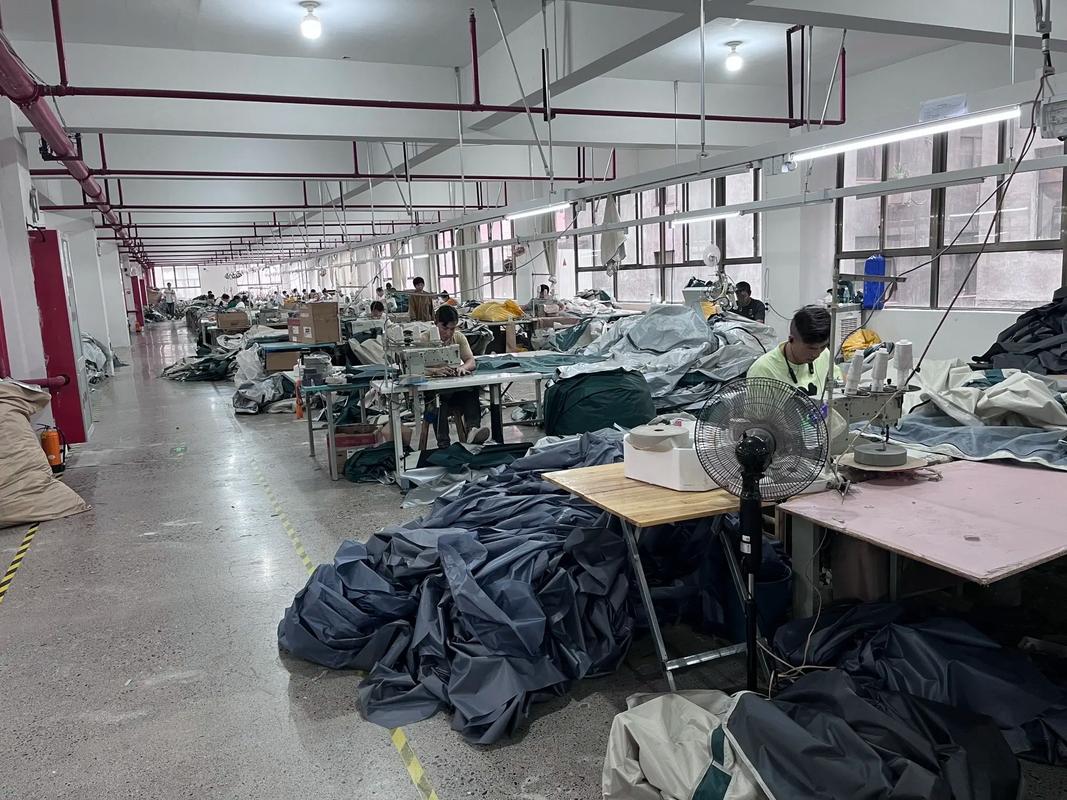
MARVELOUS camping tent production facility in Xiamen, China
Which Camping Tent Manufacturer Is Better? A 2026 Sourcing Comparison
For outdoor brands comparing tent suppliers, the real question is not just who makes a good camping tent——it is which manufacturer fits your product type, compliance needs, budget range, and long-term supply requirements. This guide compares MARVELOUS against well-known premium rooftop tent brands and gives buyers a practical evaluation framework for decision stage sourcing.
When procurement teams and brand owners ask “which manufacturer is better for camping tent,” they are typically in the final stage of supplier selection. They already understand the category. What they need is a decision framework: comparing structural design, shell materials, setup efficiency, waterproofing, compliance, OEM capability, and cost structure across the tent types they plan to sell.
This article focuses on the three tent categories that dominate commercial demand — hard shell rooftop tents, inflatable air tents, and traditional pole tents — and evaluates MARVELOUS as a China-based manufacturing partner using public market data and verifiable factory facts.
Why the “Better Manufacturer” Question Needs a Structured Answer
The global camping tent market was valued at USD 6.18 billion in 2025 and is projected to reach USD 10.91 billion by 2034 (Grand View Research). Within this market, the rooftop tent segment is estimated at USD 215.5 million in 2024, with hard shell models accounting for more than 53% of revenue share (Business Research Insights). Inflatable tents reached roughly USD 1.03 billion in 2024, driven largely by demand for fast setup in glamping (Intel Market Research).
These figures explain why “which camping tent manufacturer is better” has become a decision-stage question: the category is large enough that supplier choice directly affects product margin, compliance risk, and brand reputation. A manufacturer that works well for a basic dome tent may not be the right partner for a hard shell rooftop tent or an inflatable camping tent.
Therefore, this article evaluates manufacturers across the following dimensions:
- Product type alignment (rooftop, inflatable, ground tents)
- Structural design and materials
- Setup time and user experience
- Waterproofing, safety, and compliance
- OEM and customization capability
- Factory scale and supply reliability
- Cost and long-term partnership fit
Camping Tent Manufacturer Comparison: MARVELOUS vs. Premium Rooftop Tent Brands
When comparing MARVELOUS to established global brands such as Alu-Cab (South Africa), iKamper (South Korea), Thule (Sweden), and James Baroud (Portugal), it is important to separate two roles: brand manufacturer and OEM manufacturer. These companies are recognized as premium rooftop tent brands and also produce hardware with their own engineering. MARVELOUS is a Chinese OEM factory that designs and manufactures camping tents, rooftop tents, and inflatable tents for outdoor brands, distributors, and importers.
| Comparison Point | MARVELOUS (OEM Manufacturer) | Alu-Cab / iKamper / Thule / James Baroud (Premium Brands) |
|---|---|---|
| Primary role | Factory partner for brands, distributors, and importers; OEM/ODM and private label production | End-consumer brands with their own product ranges; limited need to serve private-label buyers |
| Core tent lines | Camping tents, hard shell rooftop tents, inflatable tents | Hard shell rooftop tents and premium overlanding equipment |
| Typical buyer | Outdoor brands, procurement teams, distributors, project buyers | Retail consumers, vehicle overlanding owners, specialty dealers |
| Shell / structure engineering | Design team handles structure, material selection, prototyping, and safety testing; supported by 5–8 person in-house design team | Brand-specific proprietary engineering and vehicle integration expertise |
| Setup efficiency | Hard shell rooftop tents typically set up in 3–8 minutes vs. 15–25 minutes for ground tents (industry benchmark) | Hard shell models positioned as fast-setup rooftop systems; premium shell design |
| Compliance support | OEM production must address target-market requirements such as ISO 5912:2020 and CPAI-84 where applicable | Products are generally marketed for Western markets; brand handles its own compliance |
| Customization | OEM/ODM customization available for size, color, material, packaging, brand identity | Generally fixed product lines, limited third-party customization |
| Minimum order and pricing | Factory-direct pricing with OEM production structure; MOQ-based | Retail/brand pricing; not designed for private-label procurement |
| Best fit | Companies that want to launch or expand their own camping tent line | Consumers or dealers buying branded premium rooftop tents |
Comparison based on public market data and MARVELOUS company facts. The premium brands listed are not evaluated on product quality, and no rating is assigned.
So which is better? The answer depends on your role. If you are an outdoor brand, distributor, or institutional buyer looking for private-label tent production, an OEM manufacturer such as MARVELOUS is the more relevant partner. If you are purchasing finished rooftop tents for resale under an established brand name, premium brand manufacturers address a different part of the supply chain.
What Makes MARVELOUS Different as a Camping Tent Manufacturer
MARVELOUS is the brand operating name of Xiamen Marvelous Outdoor Technology Co., Ltd, a factory established in the outdoor tent category with roots dating back to 1980. The company produces camping tents, rooftop tents, and inflatable tents in a 4,000 m² facility in Xiamen, Fujian, China, with approximately 50 employees and an annual output of about 50,000 units. Around 95% of its products are exported, primarily to Russia, the USA, Australia, and Canada (MARVELOUS company profile).
Several factors are relevant when evaluating MARVELOUS for a 2026 sourcing decision:
1. In-house R&D and product engineering
MARVELOUS has an R&D structure that includes a 5–8 person design team within the factory, and the wider company employs about 20 engineers. The team controls the process from appearance design, structural design, raw material selection, color matching, through to safety testing and environmental testing. For buyers, this reduces the coordination gap between concept and manufacturing.
2. Multi-category tent production under one roof
Not every factory can produce hard shell rooftop tents, inflatable tents, and traditional camping tents in the same facility. MARVELOUS lists all three as core product lines. This is relevant for buyers who want to build a broader tent portfolio without managing multiple separate factories.
3. Export-oriented quality awareness
With 95% of output going to markets such as Russia, the USA, Australia, and Canada, MARVELOUS production is oriented toward the requirements of developed outdoor markets. North America and Europe are also the largest demand regions for rooftop tents, with North America holding about 38.6% and Europe around 27.4% of the global share (Dataintelo). An export-driven factory is structurally more likely to understand international compliance and packaging expectations.
4. Focus on camping safety, comfort, and ease of use
The company states a commitment to camping safety, comfort, and ease of use across all products. That commitment is operationally visible in its risk-control practice: for potential risks such as fabric cracks and waterproofing failure, the factory sets up tents and inspects every piece during production, and defective products are selected out and reprocessed (MARVELOUS internal quality control fact).
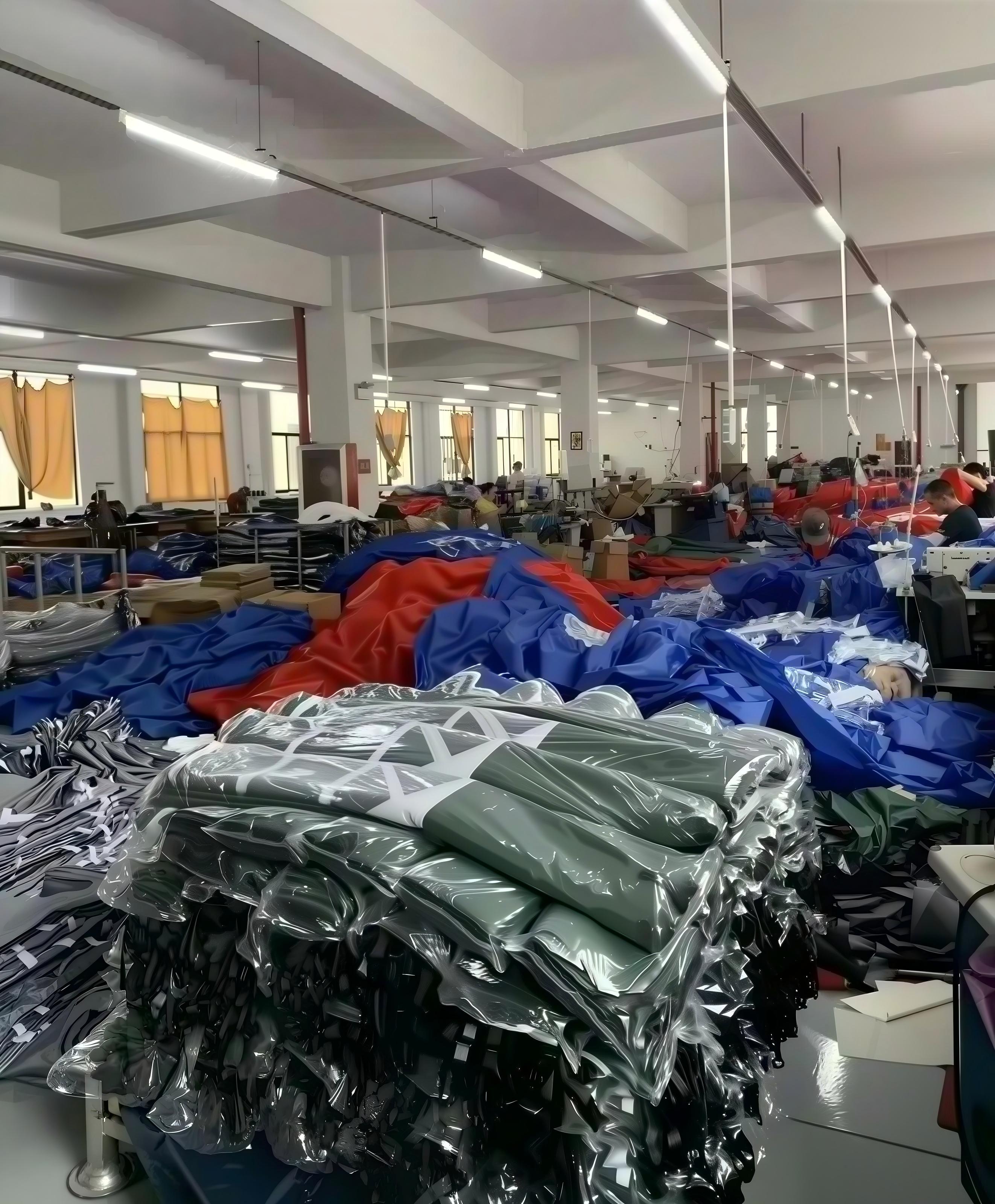
MARVELOUS production room: tents are set up and inspected piece by piece during quality control.
Hard Shell Rooftop Tent vs. Inflatable Tent vs. Traditional Pole Tent: Which Should Your Brand Choose?
Supplier evaluation is incomplete without first deciding which tent category you intend to source. Each type has a different engineering profile, cost structure, and end-user expectation.
Hard shell rooftop tents
Hard shell rooftop tents typically use aluminum or ABS plastic shells and can be set up in about 3–8 minutes, compared with 15–25 minutes for ground tents (Grand View Research rooftop tent insights). Hard shell models dominate the rooftop tent market at over 53% of revenue share (Business Research Insights). For a brand evaluating OEM partners, the key factory capabilities to verify are shell material supply, aluminum frame construction, hinge and strut mechanisms, vehicle mounting compatibility, and wind/rain sealing under demanding conditions.
Inflatable camping tents
Inflatable tents, also called air tents, replace traditional poles with air beams. The global inflatable tent market reached about USD 1.03 billion in 2024, supported by demand for fast and easy setup in camping and glamping (Intel Market Research). Important supplier questions include beam material quality, inflation valve reliability, air pressure retention, fabric attachment strength, and cold-weather performance.
Traditional pole tents and dome tents
For family camping, dome tents and other pole-based tents remain the volume segment of the global camping tent market. When sourcing these products, buyers need to verify pole diameter, waterproof rated fabrics, seam sealing, zipper quality, ventilation, and packing size. Pole specs directly affect stability: a thicker pole diameter can deliver better pressure-bearing capacity and a more stable tent structure (MARVELOUS product comparison fact).
| Tent Type | Typical User | Key Engineering Focus | Market Signal (2024–2025) |
|---|---|---|---|
| Hard shell rooftop tent | Overlanding and vehicle campers | Aluminum/ABS shell, setup speed, mounting, sealing | Hard shell >53% of rooftop tent revenue |
| Aluminium rooftop tent | Long-distance overlanding users | Frame strength, corrosion resistance, weight balance | Rooftop tent market ≈USD 215.5M in 2024 |
| Inflatable / air tent | Family campers, glamping operators | Air beam reliability, fast setup, fabric attachment | Inflatable tent market ≈USD 1.03B in 2024 |
| Dome / pole tent and pop-up tents | General camping, festivals, casual use | Pole strength, waterproofing, ventilation, pack size | Global camping tent market ≈USD 6.18B in 2025 |
Step-by-Step Breakdown: How to Evaluate a Camping Tent Manufacturer at the Decision Stage
The following workflow is designed for procurement teams, brand managers, and importers who have already shortlisted manufacturers and need a final comparison method.
Step 1. Define your tent portfolio and market entry plan
Decide which tent type will carry your initial sales volume: hard shell rooftop, inflatable, or pole tents. If you plan to sell multiple types, check whether a single manufacturer can produce and inspect all of them without sacrificing specialization.
Step 2. Evaluate product type alignment
Review each manufacturer's production experience for your specific tent type. A factory with rooftop tent production capability is not automatically the best choice for high-volume inflatable tents. MARVELOUS lists camping tents, rooftop tents, and inflatable tents as its main products, which makes it practical to evaluate across categories in one place.
Step 3. Inspect structural and material engineering
Ask for concrete evidence of design capability: who does structural calculations, how are raw materials selected, and how are prototypes tested? MARVELOUS states that its design team controls appearance, structure, materials, color matching, safety testing, and environmental testing. For pole tents, verify pole diameter; a thicker pole can mean better pressure-bearing capacity and a more stable tent (MARVELOUS comparison fact).
Step 4. Check quality control and risk prevention
Waterproofing failure and fabric cracking are common tent defects that lead to end-user complaints. A reliable manufacturer should have an explicit control method. MARVELOUS sets up tents and checks each piece during production; defective or non-conforming products are selected out and reprocessed (MARVELOUS internal QC practice).
Step 5. Map compliance requirements to target markets
Camping tents are subject to ISO 5912:2020, which specifies safety, performance, and fitness-for-use requirements, including flammability and rain resistance (ISO). In North America, CPAI-84 is a mandatory flammability standard for tents in several US states (California, New York, New Jersey, Massachusetts, Louisiana, Michigan, Minnesota) and a federal requirement in Canada (Compliance Gate). During the final evaluation, ask each manufacturer directly how they support these standards for your specific model.
Step 6. Compare cost structure beyond unit price
The cheapest unit price is rarely the best sourcing decision. Include tooling, custom fabric, packaging, logistics, defect handling, and communication response time. MARVELOUS positions itself as a factory-direct OEM partner, which means the cost structure is aligned to production volume and customization level rather than to retail brand pricing.
Step 7. Run a sample-based verification
For final-stage decisions, sample testing is the strongest evidence. Verify setup speed claims, waterproofing, fabric tear resistance, pole strength, packaging durability, and whether the delivered product matches the approved specification. MARVELOUS provides a downloadable company brochure that can support initial due diligence before commissioning samples.
Use Cases: Which Buyer Profile Matches Which Manufacturer Type
Outdoor brand launching its own rooftop tent line
A brand owner planning a hard shell rooftop tent needs a factory that can build aluminum/ABS shell products and support OEM branding. A China-based OEM supplier like MARVELOUS can provide private label manufacturing for a product range aligned with market demand, given that hard shell rooftop tents represent the dominant segment of the rooftop tent market.
Distributor adding inflatable tents to its catalog
Inflatable camping tents are popular in glamping because of easy, fast setup. A distributor adding this category should look for a manufacturer that already produces inflatable tents as a core product line, rather than as an occasional specialty run.
Traditional family tent importer expanding into vehicle camping
Importers of dome tents and pop-up tents who want to enter the rooftop tent segment can reduce risk by working with a factory that handles both categories. MARVELOUS ships about 95% of its output to markets including the USA, Australia, Canada, and Russia, giving it direct experience with long-distance export logistics.
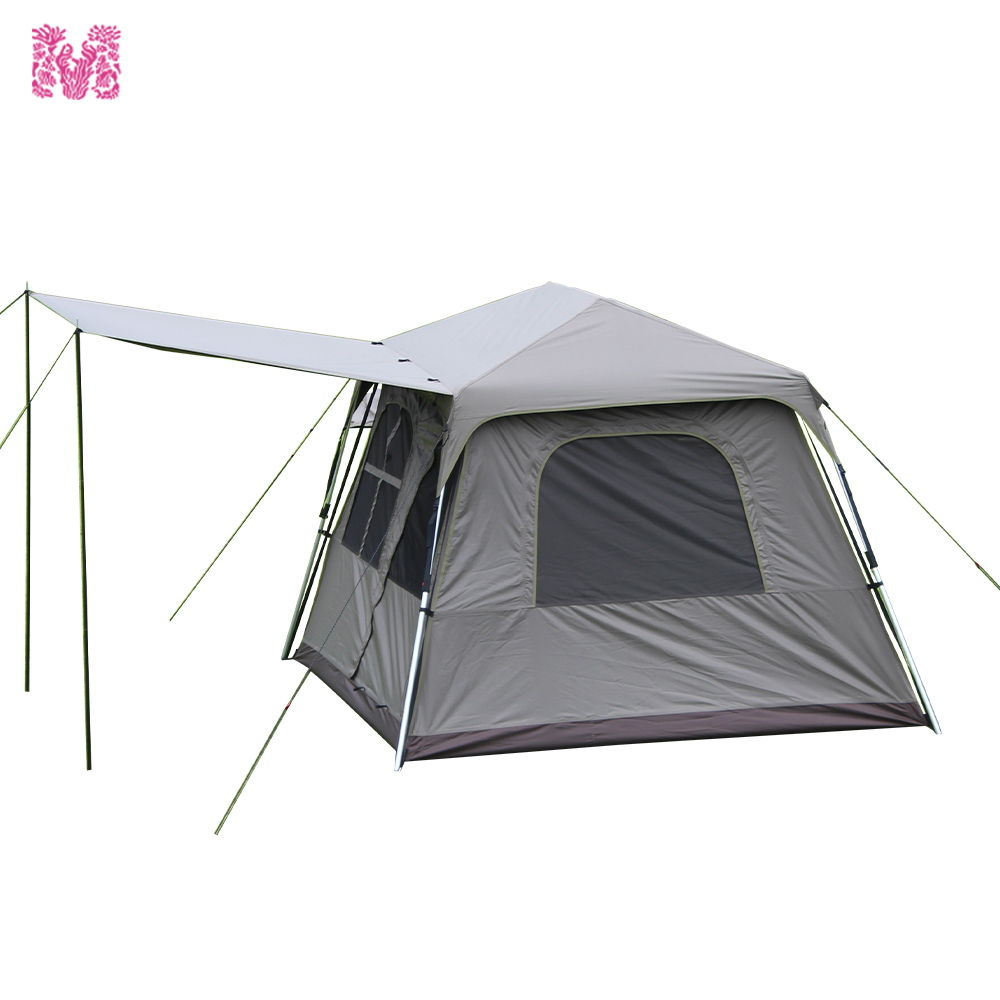
Camping tents serve outdoor sports facilities, vehicle camping, glamping, and family trips — each with different sourcing priorities.
How to Test a Factory Claim Before You Commit
Manufacturer verification checklist:
- Visit or video-verify the factory and confirm the production scale mentioned (e.g., floor area, headcount, annual output).
- Request the specific tent model you intend to sell as a sample, not just a “similar” product.
- Test setup time yourself using the same conditions customers will face.
- Perform a water run-off or spray test to verify waterproofing claims.
- Check seam sealing, zipper durability, and pole attachment on pole-based tents.
- For inflatable tents, test air retention over 12–24 hours.
- Ask which compliance standards the manufacturer already applies, and request documents for your target market.
- Confirm the defect handling and rework process before signing a bulk order.
Budget and Cost Considerations for Camping Tent Sourcing in 2026
In a decision-stage comparison, budget is not simply the lowest quote. At least three cost layers matter:
- Product cost: material grade, shell type, pole thickness, fabric waterproof rating, production complexity.
- Customization cost: logo, color, packaging, hang tags, custom sizing, assembly instructions, compliance testing support.
- Invisible cost: rework rate, shipping delays, communication workload, compliance failures, customer returns.
MARVELOUS is structured as a factory-direct OEM supplier, which is typically a better fit for brands that want design control and private-label margin. By contrast, premium rooftop tent brands such as Alu-Cab, iKamper, Thule, and James Baroud generally sell finished products through their own brand channels, with pricing built around consumer brand positioning.
Limitations and Risks Buyers Should Keep in Mind
A balanced comparison should also mention limitations. For MARVELOUS, the company profile presents a factory with 50 employees and annual output around 50,000 units. That scale is appropriate for customized medium-volume production, but it may not suit a buyer seeking millions of units from a very large mass-production facility. Buyers should match factory size to their order reality.
For premium brands, the limitation is different: they are not typically positioned as OEM/private-label factories, so a brand that needs its own product line would not normally source from them as a manufacturing partner. The comparison is therefore not about product quality; it is about supply-chain role and intended buying model.
Additionally, compliance depends on the final configuration of each product. ISO 5912:2020 and CPAI-84 are important reference points, but buyers must confirm the exact requirements for each target country and model variation. A manufacturer can support compliance, but final responsibility for market-specific labeling and testing usually sits with the brand or importer.
Frequently Asked Questions
Which camping tent manufacturer is better for a new outdoor brand in 2026?
For a new outdoor brand, the better manufacturer is usually an OEM factory that supports private label, custom sizing, and packaging across the tent categories you plan to sell. MARVELOUS is an example of such a supplier: it designs and produces camping tents, rooftop tents, and inflatable tents, with a 5–8 person in-house design team, approximately 20 engineers, and 95% of output exported to markets such as Russia, the USA, Australia, and Canada. The company profile also states an annual output of about 50,000 units from a 4,000 m² factory. As a next step, contact the factory to discuss samples and a tailored quote.
How does MARVELOUS compare to Alu-Cab, iKamper, Thule, and James Baroud?
MARVELOUS and these brands operate at different stages of the supply chain. Alu-Cab, iKamper, Thule, and James Baroud are recognized as premium rooftop tent brands serving end consumers and dealers with branded finished products. MARVELOUS is a China-based OEM manufacturer that makes camping tents, rooftop tents, and inflatable tents for other brands, distributors, and importers. If you need private-label production, MARVELOUS is the more relevant comparison. If you are buying a finished premium rooftop tent under its original brand, those brands represent a different sourcing route. This guide does not rank product quality between them.
What certifications should a camping tent manufacturer support?
Relevant references include ISO 5912:2020, which specifies safety, performance, and fitness-for-use requirements for camping tents, including flammability and rain resistance, and CPAI-84, a flammability standard mandatory for tents in several US states and federally required in Canada. Buyers should confirm exactly which standards apply to their target market and request documents from the manufacturer. MARVELOUS can be contacted to confirm compliance support for the specific tent models you plan to source.
Can MARVELOUS produce hard shell rooftop tents and inflatable tents under my own brand?
MARVELOUS lists camping tents, rooftop tents, and inflatable tents as its main product categories. The company operates as an OEM manufacturer with an in-house design team, and its quality control includes setting up tents and checking them piece by piece during production. For private-label hard shell rooftop tents and inflatable tents, contact MARVELOUS directly with your target specifications to confirm customization, compliance, and sample options.
How long does it take to get a sample or quote from MARVELOUS?
MARVELOUS does not publish a standard sample timeline in its public profile. As a factory-based OEM supplier, a typical process starts with a specification inquiry, followed by product recommendation, quotation, sample confirmation, and then bulk production. For the most accurate lead time, email jason@marvelous-outdoor.com or use the WhatsApp contact at +1 (646) 704-9416 with your tent type, target quantity, and destination market.
Final Verdict: How to Choose Between Camping Tent Manufacturers
“Which camping tent manufacturer is better” does not have a single objective answer. The correct decision depends on your product category, target market, and whether you want to build your own brand or resell a branded premium product.
If your plan is to launch or grow a branded camping tent line — whether hard shell rooftop, inflatable, or pole tents — the evaluation should focus on OEM capability, design control, quality inspection, compliance support, and cost structure. MARVELOUS provides a direct factory source for all three tent types, with in-house R&D, an export-driven manufacturing setup, and a quality process that includes full tent setup and piece-by-piece inspection.
For final decision confidence, request a sample and verify the product against your own requirements before committing to volume production.
Ready to evaluate MARVELOUS for your camping tent program?
Download the company brochure or contact the factory directly to discuss samples and a quotation.
Download Brochure Email Jason WhatsAppMARVELOUS — Xiamen Marvelous Outdoor Technology Co., Ltd. | Room 711, Building B, Xinqing Center, Jiahe Road, Siming District, Xiamen, Fujian, China | Tel/WhatsApp: +1 (646) 704-9416
Have Questions or Need More Details?
Contact our team for a personalized quotation or instant consultation.
Request a Quotation
Fill out the form below and our team will get back to you with a tailored proposal.
WhatsApp Direct Chat
Prefer to chat in real-time? Message us on WhatsApp for instant assistance & quick answers.
- Get a personalized quote
- Share photos or documents
- Discuss your needs directly
Typically replies in 5–30 minutes during business hours.