
Camping Tent Essentials: Choosing a Reliable Camping Tent for Every Adventure
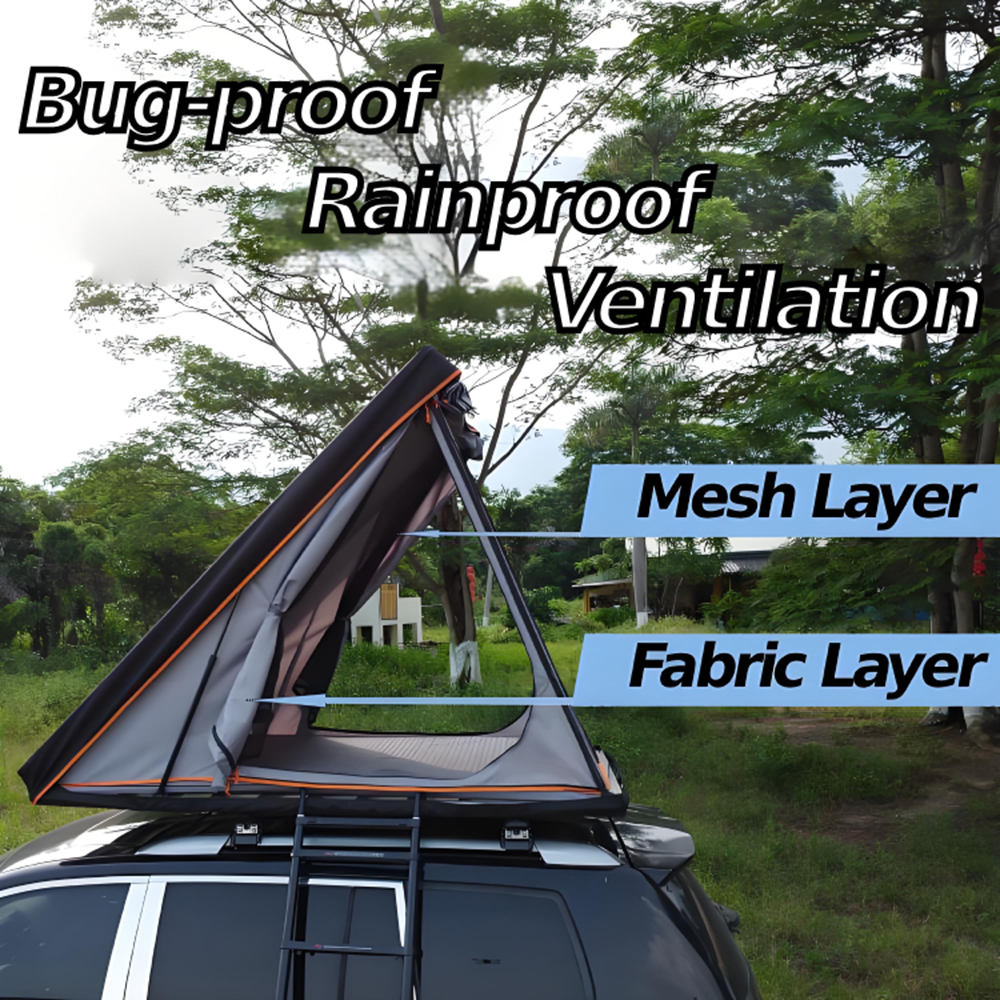
Camping is one of the most practical ways to reconnect with the outdoors, but the quality of the experience depends heavily on the shelter you choose. A camping tent is more than just a fabric shell: it is your protection against rain, wind, cold, insects, and uneven terrain. In broad terms, a camping tent is a portable shelter designed for outdoor sleeping and living, with variations that include ground tents, family tents, rooftop tents, and inflatable air tents. The right choice depends on how you camp, where you camp, and who is coming with you.
What Does “Camping Tent” Really Mean in 2026?
A camping tent, in the most basic definition, is a temporary shelter made of fabric supported by poles or an air frame, designed to protect campers from the elements. But the category has expanded well beyond the traditional dome tent. Today, campers can choose from ground tents, quick-pitch family tents, rooftop tents mounted on vehicles, and inflatable tents that use air columns instead of poles.
For buyers, the term “camping tent” now covers several distinct product types. Understanding the difference between them is the first step in making a confident purchase.
Why the Camping Tent Market Is Growing
Camping participation has been rising globally, and the equipment market reflects that trend. According to Grand View Research, the global camping tent market was valued at USD 6.18 billion in 2025 and is projected to reach USD 10.91 billion by 2034. More people are using tents not only for traditional camping but also for overlanding, glamping, car camping, and extended outdoor travel.
Segment growth is also visible in specific product categories. The global rooftop tent market was valued at approximately USD 215.5 million in 2024, with hard shell models dominating more than 53% of revenue share, according to Business Research Insights. Inflatable tents reached an estimated USD 1.033 billion in 2024, driven by the demand for easy and fast setup in glamping, according to Intel Market Research. These figures point to one practical conclusion: campers are looking for shelters that are faster to set up, more durable, and more comfortable.
Key Camping Tent Categories: A Practical Comparison
To choose well, it helps to compare the main tent types side by side. Each format solves a different problem.
| Type | Best For | Key Characteristics | Considerations |
|---|---|---|---|
| Family ground tent | Car camping, group trips, longer stays | Large space, multiple rooms, often uses pole frames | Heavier and larger to pack; requires more setup space |
| Rooftop tent | Overlanding, vehicle-based travel | Mounted on roof rack; keeps campers off the ground | Requires roof rack compatibility; adds weight to vehicle |
| Hard shell rooftop tent | Fast setup, all-season travel, durability | Open in 3–8 minutes; aluminum or ABS shell | Higher upfront cost; fixed footprint on roof |
| Inflatable tent | Quick setup, easy packing, glamping | Air beams instead of poles; compact packed size | Requires pump; air columns need proper care |
This comparison is not about ranking one type above another. It is about matching the tent to the trip.
Detailed Solution: What to Look for in a Reliable Camping Tent
Once you narrow down the tent type, the next question is quality. A reliable camping tent should meet a few non-negotiable standards, regardless of its format.
1. Waterproofing
Rain is the most common reason a camping trip becomes uncomfortable. Waterproofing is measured in millimeters (mm) of hydrostatic head. For camping tents used in rainy or snowy conditions, a waterproof rating of at least 3000mm is the recommended baseline. For example, several MARVELOUS tents are designed around this requirement: the MOT-L800 rooftop tent has a waterproof index of 3000mm, while the MOT-DYG01 and MOT-Q500 offer 3500mm and PU5000mm respectively. Higher ratings generally indicate stronger rain protection.
2. Fabric and Frame Durability
A tent is only as strong as its materials. Common fabrics include 200D, 300D, 420D, and 600D Oxford cloth. In simple terms, the higher the D (denier), the heavier and generally more abrasion-resistant the fabric. The MOT-DYG01, for example, uses 600D Oxford cloth with UV and mould resistance, making it a durable option for long-term vehicle-mounted use. Frame materials also matter. Aviation aluminum is often used in rooftop tents because it combines strength with lighter weight. The MOT-L800 and MOT-DYG01 both use aviation aluminum frames.
3. UV and Weather Resistance
Prolonged sun exposure can degrade tent fabric and fade colors. Fabrics with UPF50+ protection help reduce UV damage. The MOT-CT900 family tent and the MOT-Q500 inflatable tent both feature UPF50+ fabric. If you camp in high-altitude or high-sun areas, UV-resistant fabric should be on your checklist.
4. Ventilation and Insect Protection
Condensation inside a tent is a common problem, especially in cold weather. Look for mesh panels that allow airflow while keeping insects out. The MOT-M100 family tent includes high-density anti-mosquito mesh and transparent TPU/PU sections, which help with both ventilation and visibility.
5. Setup Speed
Setup speed is a practical concern, especially after a long drive or a late arrival at camp. Hard shell rooftop tents typically set up in 3–8 minutes, compared to 15–25 minutes for many ground tents, according to Grand View Research rooftop tent insights. Inflatable tents also offer fast setup because air columns inflate quickly instead of requiring pole assembly.
6. Capacity and Layout
Capacity figures should be read as sleeping capacity, not comfortable living space. A tent rated for 4 people will sleep four people, but the tent may feel tight if you also store gear inside. Check expanded dimensions before buying. For example, the MOT-L800 rooftop tent expands to 215 x 251 x 110 cm and is rated for 4 people. The MOT-Q500 inflatable tent expands to 270 x 270 x 200 cm and is rated for 4–5 people. The MOT-M100 family tent expands to 375 x 375 x 240 cm and is rated for 6–8 people.
Step-by-Step Breakdown: How to Choose Your Camping Tent
Step 1: Define Your Camping Style
Start by answering three questions. Do you camp mostly at established campgrounds? Do you drive to the campsite with all your gear? Do you prefer car-based overlanding or hiking with lightweight equipment? Your answers will point you toward ground tents, family tents, rooftop tents, or inflatable tents.
Step 2: Decide Between Ground, Rooftop, or Inflatable
Each format has a different relationship with the campsite. Ground tents are versatile and easy to use anywhere. Rooftop tents keep you off the ground, which is useful on uneven or wet terrain, and are designed for vehicle-based camping. Inflatable tents replace poles with air beams, which makes them compact and fast to pitch.
Step 3: Match Capacity to Your Group
Choose a tent that fits your group size with a little extra room. A 2-person tent is designed for two people, but if you want space for gear or a more comfortable night’s sleep, consider sizing up. Family tents like the MOT-CT900 (4–5 people) or MOT-M100 (6–8 people) offer generous space for group camping.
Step 4: Check the Weather Rating
Review the waterproof rating, fabric denier, and whether the tent is rated for all-season use. Some tents are marketed for three seasons, while others are designed for all seasons including rainy and snowy conditions. For cold-weather or high-terrain adventures, prioritize a tent with a robust frame and a waterproof rating of at least 3000mm.
Step 5: Consider Setup and Packing
If you frequently move between campsites, setup time and packed size matter. Inflatable tents often pack into compact bags, making them easier to store in a car. Rooftop tents live on the roof rack, so you do not carry them on your back, but you need a compatible roof rack and a vehicle that can support the weight.
Step 6: Verify Manufacturer Quality
If you are sourcing a camping tent for a brand, a store, or a large group, look deeper into the manufacturer. Key indicators of reliability include a dedicated production facility, an in-house design team, and consistent annual output. For example, XIAMEN MARVELOUS OUTDOOR TECHNOLOGY Co., Ltd. operates a 4,000 m² facility with approximately 50 employees and an annual production capacity of 50,000 units. These figures are not marketing claims; they are verifiable indicators that the factory has an established production system.
Use Case 1: Vehicle-Based Overlanding with a Roof Top Tent
Overlanding is one of the fastest-growing forms of outdoor travel. Travelers use vehicles to reach remote locations and often camp in the same spot where the vehicle is parked. A roof top tent is a natural fit because it uses existing vehicle roof racks and keeps the sleeping area above the ground.
MARVELOUS offers several rooftop tent models. The MOT-LK901 is a hard shell aluminum rooftop tent designed for 1–2 people. It uses an aluminum shell with an outer tent fabric of 420D Oxford cloth and an inner tent fabric of 280g polyester cotton. The waterproof rating is PU4000MM. Its expanded size is 210 x 130 x 140 cm. This model is suitable for solo travelers or couples who want quick setup and a compact footprint on the roof.
For larger groups, the MOT-L800 is a 4-person roof top tent with a 300D Oxford cloth body, aviation aluminum frame, and a 3000mm waterproof rating. It expands to 215 x 251 x 110 cm and includes an aluminum telescopic ladder, installation bag, mattress, shoe bags, and rods. The MOT-DYG01, in turn, is a 2-person rooftop tent with a lighter net weight of 32 kg, a 600D Oxford fabric, a 3500mm waterproof rating, and UV/mould resistance. It folds down to 210 x 125 x 20 cm, making it one of the more compact hard shell options.
For campers in the US, Europe, Australia, and Canada, rooftop tents must be compatible with most vehicle roof racks. MARVELOUS designs its rooftop tents with this compatibility requirement in mind, along with a wind-resistant structure and fabric that suits rainy and snowy conditions.
Use Case 2: Family Camping with Ground Tents
Family camping usually means more people, more gear, and longer stays. A family ground tent offers generous floor space for sleeping and a place to move around when the weather turns.
The MOT-CT900 is a family tent designed for 4–5 people. It uses 200D Titanium Black Rubber Oxford Cloth with aluminum alloy poles, a PU coating with a 5000mm waterproof rating, and UPF50+ UV protection. It includes 2 tent telescopic support poles, 14 nails, and 7 ropes. The folded dimensions are 106 x 26 x 26 cm, which is manageable for car transport.
The MOT-M100 is a larger family tent for 6–8 people. It uses 200D titanium black plastic plaid cloth with a quick open iron frame, high-density anti-mosquito mesh, and transparent TPU/PU sections with a 5000mm waterproof rating. Its expanded size is 375 x 375 x 240 cm. For larger families or groups who camp together, this model provides the space needed for multiple sleeping areas and gear storage.
Family tents like the MOT-CT900 and MOT-M100 serve a clear function: shelter from weather elements, thermal insulation, and privacy. They are designed for manual setup and stationary use, meaning they are best suited for campsites where you plan to stay for a day or more.
Use Case 3: Quick Camping and Glamping with Inflatable Tents
Inflatable tents use air columns instead of metal or fiberglass poles. They can be set up quickly with an air pump, which is a major advantage when you arrive at camp late or want a low-friction experience.
The MOT-Q500 is an inflatable camping tent designed for 4–5 people. Its frame is a 5-layer PVC air column. The tent body uses 200D Oxford cloth with a PU5000mm waterproof rating and UPF50+ sun protection. It expands to 270 x 270 x 200 cm and packs down to 77 x 39 x 39 cm. The net weight is 13.6 kg, and the gross weight is 15 kg. It comes with ground nails and rope as accessories.
Inflatable tents are especially relevant to the glamping segment, where comfort and convenience are prioritized. Because inflatable tents do not require long pole sections, their packed dimensions are often more compact than traditional dome tents with the same capacity.
Manufacturer Perspective: Why Manufacturing Quality Matters
When buying a camping tent, it is easy to focus only on the product, but the manufacturer determines consistency. A reliable manufacturer should be able to demonstrate control over materials, production capacity, and design.
MARVELOUS, established in 2019 as XIAMEN MARVELOUS OUTDOOR TECHNOLOGY Co., Ltd., specializes in camping tents, rooftop tents, and inflatable tents. The company reports that 95% of its sales come from export markets, including Russia, the USA, Australia, and Canada. Its production facility covers 4,000 m² and employs about 50 people. An in-house design team of 5–8 people handles appearance design, structural design, material selection, color matching, and safety/environmental testing.
For importers, distributors, and outdoor brands, these facts matter because they show that the supplier has a functioning production system, not just a catalog. A 50,000-unit annual production capacity also indicates that the factory is equipped for repeat orders, which is essential for long-term partnerships.
Comparison Table: MARVELOUS Camping Tent Models at a Glance
| Model | Type | Capacity | Fabric | Waterproof | Frame | Expanded Size (cm) | Net Weight |
|---|---|---|---|---|---|---|---|
| MOT-L800 | Rooftop (hard shell) | 4 people | 300D Oxford | 3000mm | Aviation Aluminum | 215 x 251 x 110 | 140 kg |
| MOT-LK901 | Rooftop (hard shell) | 1–2 people | Outer 420D Oxford / inner 280g poly-cotton | PU4000MM | Aluminum shell | 210 x 130 x 140 | 60 kg |
| MOT-DYG01 | Rooftop (hard shell) | 2 people | 600D Oxford | 3500mm | Aviation Aluminum | 210 x 125 x 140 | 32 kg |
| MOT-Q500 | Inflatable tent | 4–5 people | 200D Oxford | PU5000mm | 5-layer PVC air column | 270 x 270 x 200 | 13.6 kg |
| MOT-CT900 | Family tent | 4–5 people | 200D Titanium Black Rubber Oxford | 5000mm | Aluminum Alloy | 375 x 375 x 240 folded 106 x 26 x 26 | 12.9 kg |
| MOT-M100 | Family tent | 6–8 people | 200D Titanium Black Plaid | 5000mm | Quick-open Iron | 375 x 375 x 240 | 11 kg |
| MOT-CT096 | Family camping tent | Not specified | 210D Oxford PU | 2000mm | Steel | 430 x 305 x 200 | 14.5 kg (G.W.) |
This table is not an exhaustive specification list. It is intended as a comparison tool for buyers who want to understand how capacity, fabric, waterproofing, and frame type differ across popular models.
What About Certifications and Standards?
Camping tents are subject to safety and performance standards in many markets. For example, ISO 5912:2020 specifies safety, performance, and fitness-for-use requirements for camping tents, including flammability and rain resistance. In North America, CPAI-84 is a mandatory flammability standard for tents in several US states (California, New York, New Jersey, Massachusetts, Louisiana, Michigan, and Minnesota) and a federal requirement in Canada.
If you are buying or importing tents for resale, ask the manufacturer whether the specific models meet the standards required in your target market. Standards compliance is not something you can assume from product photos or general marketing claims.
Common Mistakes When Buying a Camping Tent
Mistake 1: Focusing Only on Capacity
A tent rated for 4 people may not comfortably fit 4 adults plus gear. Check the floor dimensions and consider your actual sleeping arrangement.
Mistake 2: Ignoring Waterproof Rating
If you camp in areas with frequent rain, a 2000mm rating may not be enough. Look for a rating of at least 3000mm for reliable rain protection.
Mistake 3: Overlooking Packed Size and Weight
A tent that is too heavy or too long to fit into your vehicle becomes a practical problem. Measure your car’s trunk or roof space before buying a large family tent or rooftop tent.
Mistake 4: Assuming All Rooftop Tents Fit All Vehicles
Rooftop tents require a compatible roof rack and a vehicle roof that can support the tent’s weight. The MOT-DYG01, at 32 kg net weight, is lighter than the MOT-L800 at 140 kg. Always check vehicle load capacity.
Mistake 5: Buying from Suppliers Without Production Verification
For B2B buyers, the supplier’s production capability is as important as the product. A manufacturer with a real production facility, such as MARVELOUS’s 4,000 m² factory and annual output of 50,000 units, can provide more reliable quality control and order fulfillment.
FAQ
1. What should I look for in a camping tent manufacturer?
Look for verifiable production capability, including a dedicated factory, stable annual output, and in-house design support. MARVELOUS, for example, operates a 4,000 m² facility in Xiamen, employs about 50 staff, and has an annual production capacity of 50,000 units, which indicates an established production system for camping tents, rooftop tents, and inflatable tents.
2. What is the difference between a rooftop tent and a ground camping tent?
A rooftop tent mounts onto a vehicle’s roof rack and keeps campers above the ground, while a ground tent is set up on the campsite floor. Rooftop tents are often faster to set up—hard shell models typically take 3–8 minutes—and are well suited for overlanding and vehicle-based travel. Ground tents generally offer more floor space and are easier to use in a wider range of campsites.
3. How much does a good camping tent cost?
Tent prices vary widely by type, capacity, and materials. Ground family tents are generally more affordable, while hard shell rooftop tents typically cost more because of the aluminum shell, vehicle mounting hardware, and heavier-duty materials. Rather than focusing only on price, compare waterproof rating, fabric weight, frame material, and packed size to determine value.
4. Can I get a sample before placing a bulk order?
Samples are the most reliable way to verify material quality, stitching, waterproofing, and setup before committing to a large order. For B2B buyers sourcing from manufacturers, request a production sample from the specific model you plan to order. You can contact MARVELOUS at jason@marvelous-outdoor.com to discuss sample availability.
5. How early should I start sourcing camping tents for the next season?
Start at least 2–4 months before your target selling season. This timeline allows time for sample approval, order confirmation, production, quality inspection, and shipping. For peak camping seasons, earlier planning helps secure production capacity with the manufacturer.
Conclusion
A reliable camping tent is a combination of the right format, the right materials, and a trustworthy manufacturer. Whether you choose a hard shell rooftop tent for overlanding, an inflatable tent for quick glamping trips, or a family ground tent for weekend campsites, the same underlying standards apply: waterproof fabric, a strong frame, adequate ventilation, and a packed size that fits your transport situation.
For buyers who are sourcing tents for retail, distribution, or brand partnerships, the manufacturer’s production capability is just as important as the product specifications. XIAMEN MARVELOUS OUTDOOR TECHNOLOGY Co., Ltd. specializes in camping tents, rooftop tents, and inflatable tents, with an annual production capacity of 50,000 units and export experience in Russia, the USA, Australia, and Canada.
If you are evaluating camping tent suppliers for your next season, you can download the MARVELOUS company brochure for more detailed product and production information.
Planning a camping tent order?
Request a sample or discuss your specifications with MARVELOUS.
Email: jason@marvelous-outdoor.com | Tel/WhatsApp: +1 (646) 704-9416
Have Questions or Need More Details?
Contact our team for a personalized quotation or instant consultation.
Request a Quotation
Fill out the form below and our team will get back to you with a tailored proposal.
WhatsApp Direct Chat
Prefer to chat in real-time? Message us on WhatsApp for instant assistance & quick answers.
- Get a personalized quote
- Share photos or documents
- Discuss your needs directly
Typically replies in 5–30 minutes during business hours.