OEM Camping Tent Manufacturer with Custom Sizing: Capabilities, Process & Sourcing Guide
OEM Camping Tent Manufacturer with Custom Sizing: Capabilities, Process & Sourcing Guide
Outdoor brands that want to launch a camping tent with custom sizing need an OEM manufacturer able to translate specifications into production while controlling quality, cost, and delivery. This guide explains how an OEM camping tent manufacturer with custom sizing capabilities supports that process, what buyers should verify before placing an order, and what the full cycle looks like from inquiry to shipment.
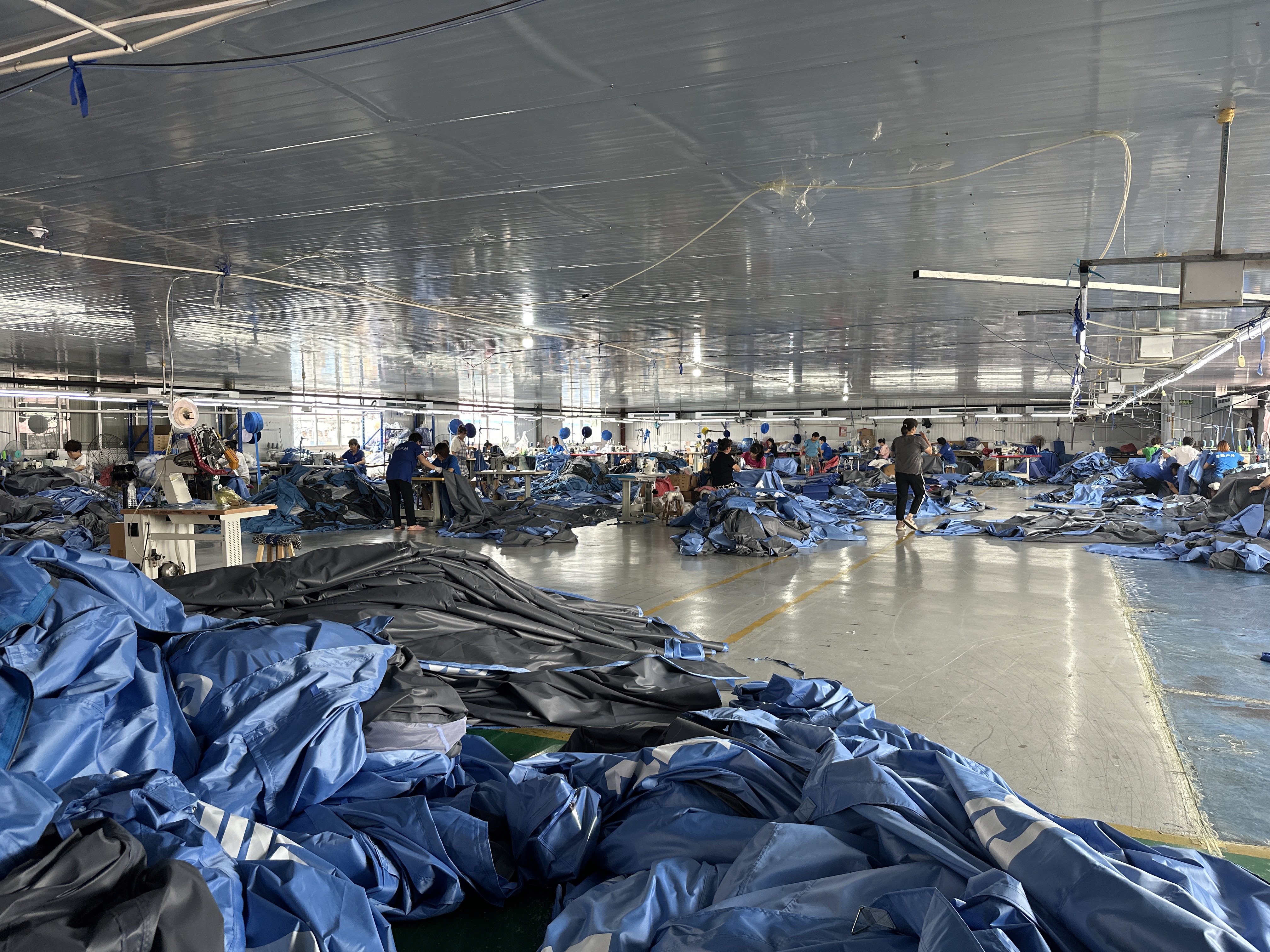
For brand owners in the outdoor industry, the central question is not just whether a factory can build a tent. The more important question is whether the factory can handle your specific size, fabric, print, and packaging requirements without disrupting quality or delivery. MARVELOUS, an outdoor tent factory in Xiamen, China, provides OEM and ODM production services, with a minimum order quantity of one unit and typical lead time of 30 days. Those parameters were taken directly from the company’s supplied operational profile, not from general assumptions about Chinese tent makers.
What Does Custom Sizing Mean in OEM Camping Tent Production?
Custom sizing in an OEM camping tent project means the manufacturer builds a tent according to the brand’s dimensional specifications rather than offering only standard catalog sizes. This can include adjusting floor dimensions, peak height, sleeping capacity, packed size, or the layout of the inner tent and vestibule.
In practice, custom sizing decisions are not independent from other design choices. Changing the size of a hard shell rooftop tent affects the shell structure, the folding mechanism, and the weight. Changing the size of an inflatable tent changes the air beam volume and the required pump performance. A manufacturer with in-house engineering and production experience should be able to flag these relationships before cutting cloth or tooling.
Why Brands Choose an OEM Camping Tent Manufacturer Instead of Buying Stock Tents
Brands choose OEM production when they need differentiation, better fit with their target users, or a product that matches their design language and quality standards. A stock tent can be resold, but it cannot build a proprietary product identity. Custom sizing supports that identity by making the tent measurably different from existing products in the market.
OEM also allows a brand to control the specification sheet: fabric weight, waterproof rating, zipper type, pole material, color, and packaging can be aligned with the brand’s positioning. For example, a family camping brand may want a 4-person hard shell rooftop tent with internal space resembling two queen beds, while an overlanding brand may prioritize a lighter 2-person model. Both can be produced under an OEM arrangement if the manufacturer has the engineering and production flexibility.
The roof top tent market has moved toward hard shell models, with hard shell variants accounting for more than 53% of the global rooftop tent revenue share in 2024 according to Business Research Insights. Because hard shell tents are structurally more complex than traditional ground tents, brands need a manufacturer that can execute both the shell and the folding system, not just sew fabric.
What OEM Capabilities Matter for Custom Sizing Projects?
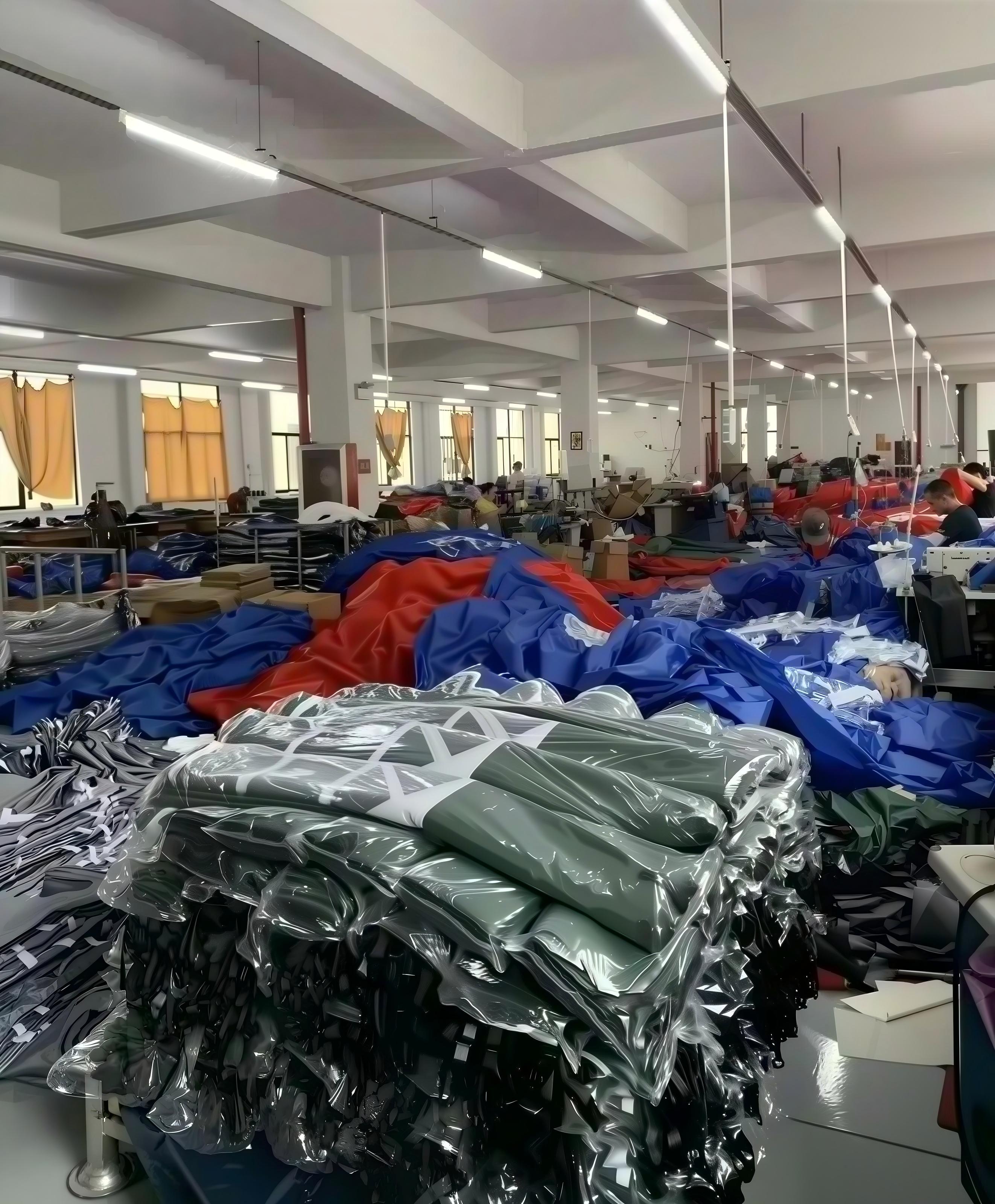
Selecting a camping tent manufacturer for a custom sizing project means evaluating more than the price per unit. The following capabilities make the difference between a smooth OEM project and a problematic one.
1. In-House Research and Development
A factory that only follows client-supplied drawings can still produce a tent, but it may miss design issues that affect usability, safety, and durability. MARVELOUS states that its factory has a five-to-eight person design team that controls appearance design, structural design, raw material selection, color matching, safety testing, and environmental testing. For custom sizing, this matters because a size change can influence structural loads, seam placement, and whether the tent remains stable in wind.
2. OEM/ODM Production Models
The manufacturer provides OEM and ODM production services globally. OEM usually means the buyer owns the design and the factory produces it. ODM usually means the factory offers its own design and the buyer can customize colors, logos, and details. Both models are relevant for custom sizing, but the level of design responsibility is different.
3. Material and Fabric Control
A custom-sized tent is only as reliable as its material specification. MARVELOUS rooftop tents in its catalog use 300D Oxford cloth with a 3000 mm waterproof index, 420D Oxford cloth with PU4000 mm waterproofing, or 600D Oxford fabric with 3500 mm waterproofing, depending on the model. These figures are from the company’s product data. When a brand requests a custom size, the manufacturer should also advise whether the intended fabric suits the larger surface area and expected wind load.
4. Structural Engineering for Rooftop and Inflatable Tents
Hard shell rooftop tents require frame and shell engineering. MARVELOUS roof top tents use aviation aluminum frames or aluminum shells, and MOT-DYG01 has a folded size of 210×125×20 cm with an open size of 210×125×140 cm. Expanding or reducing such a product means recalculating packing dimensions, vehicle load suitability, and ladder access. Inflatable tents, by contrast, rely on air beam geometry and pump matching. Both product types require engineering judgment that is not visible on the surface.
5. Testing and Quality Control
Quality control follows 100% testing standards, meaning each unit is checked rather than a sample-only inspection. For custom projects, this reduces the risk of size deviations and sewing defects reaching the end customer. Buyers should still define the acceptance criteria before mass production, especially for measurements, waterproof seams, and zipper function.
6. Flexible MOQ and Consistent Lead Time
MARVELOUS operates with a minimum order quantity of 1 unit and a typical lead time of 30 days. This is notable for a factory with a monthly capacity of 5,000–10,000 units. A low MOQ allows a brand to test a custom size before committing to a large production run. A 30-day lead time provides a practical planning window for product launches and reorders.
Step-by-Step Process for a Custom-Sized Camping Tent OEM Project
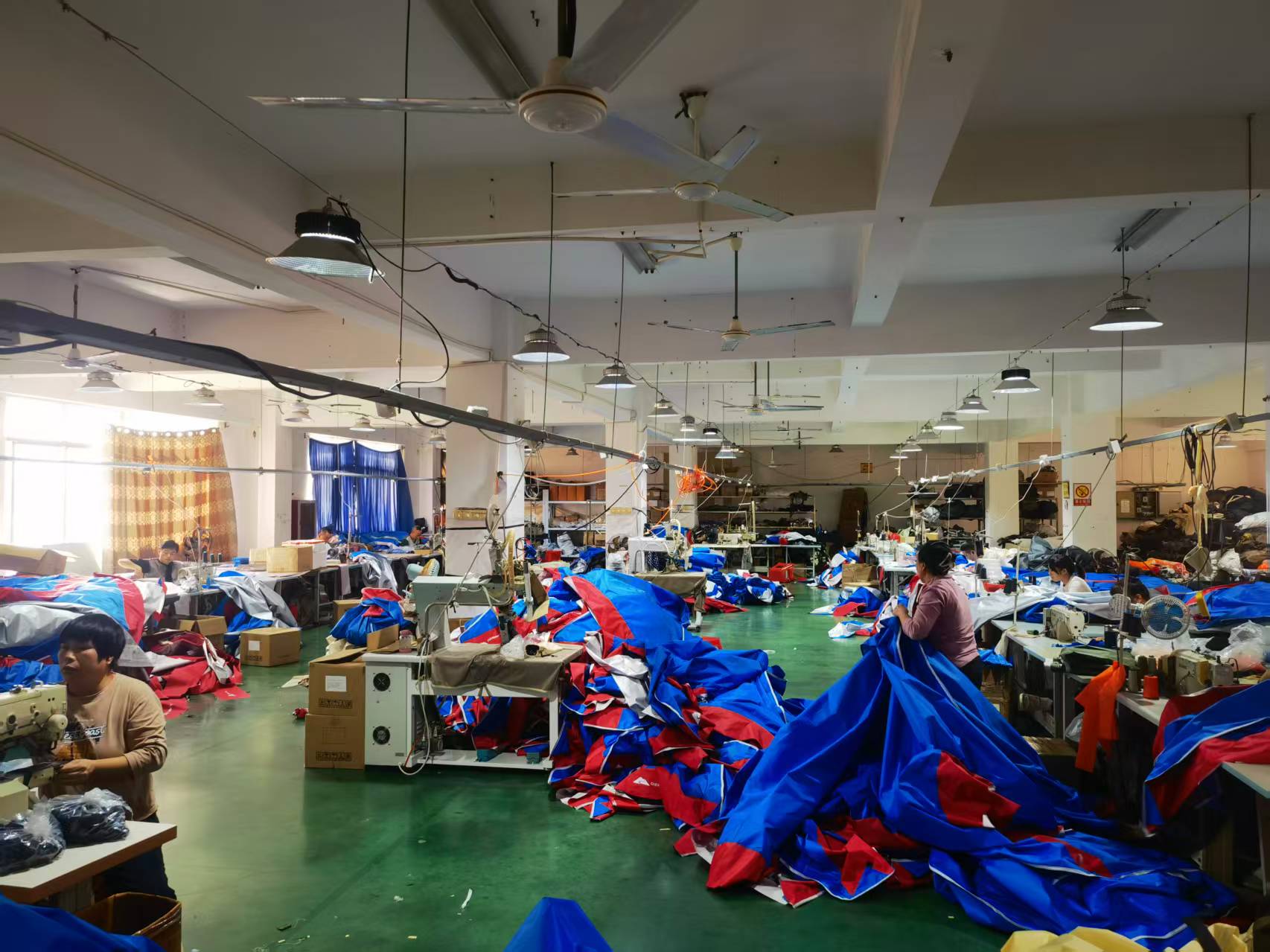
Even though every project differs, buyers can expect the following six stages when working with an OEM camping tent manufacturer.
Step 1: Clarify the Product Category
Decide whether the custom tent will be a hard shell rooftop tent, an inflatable tent, a dome tent, or another type. This decision drives the entire engineering and production path. The factory’s experience with rooftop and inflatable tents matters here because these structures use different materials, frames, and quality tests.
Step 2: Build the Specification Sheet
Define target dimensions, capacity, fabric type, waterproof rating, color, and accessories. For a 2-person rooftop tent, a starting reference could be the MOT-DYG01 specification: open size 210×125×140 cm and packed dimensions 210×125×20 cm. For a 4-person tent, the MOT-L800 reference is expanded size 215×251×110 cm with packing dimensions 233×155×32 cm. Your custom size may differ, but these examples show the relationship between open floor area and packed dimensions.
Step 3: Review Feasibility with the Manufacturer
Share the specification with the factory before placing an order. The manufacturer should confirm whether the size can be produced, what material adjustments are needed, and how the change affects weight and packaging. An experienced factory will also compare your request with existing designs to avoid unnecessary tooling cost.
Step 4: Create and Approve the Sample
Production should not start without a pre-production sample. With an MOQ of 1 unit, the first unit may serve as both sample and first finished product. The buyer should measure the sample against the approved dimensions, check fabric feel and print, set up the tent fully, and inspect zippers, seams, poles, and mattress fit.
Step 5: Run Production with Factory Inspection
During bulk production, the buyer can rely on the factory’s 100% testing standard, but may also choose to appoint a third-party inspection before shipment. The company’s purchasing support terms include EXW, FOB, or CIF delivery methods, TT or LC payment, and pre-shipment testing acceptance.
Step 6: Arrange Delivery and Long-Term Support
After production, the tents are packed and shipped. MARVELOUS exports to markets including the U.S., EU, Canada, Australia, Korea, and Japan, with about 95% of output exported. After-sales support is described as replacement support, which gives buyers a clear path if a defective unit is found after shipment.
Use Cases: Where Custom Sizing Creates Real Value
Family Camping Brands
Brands targeting family campers may request a larger rooftop tent that can sleep two adults and several children. One MARVELOUS customer in Australia described a 4-person side-fold hard shell tent as having space similar to two queen beds inside, fitting two adults and three children comfortably. The customer highlighted high quality materials and a stable structure. For a brand, this use case shows that custom sizing is not only a technical feature; it directly affects the comfort message that the brand can communicate.
Overlanding and 4x4 Accessory Brands
Overlanding-focused brands often need a hard shell rooftop tent that installs quickly and keeps a low profile on the vehicle. The verified market insight that hard shell rooftop tents typically set up in 3–8 minutes, compared with 15–25 minutes for ground tents, helps explain why this category is attractive. A custom-sized hard shell tent can match specific roof rack lengths and vehicle weight limits.
Glamping and Event Rental Companies
Inflatable tents are associated with speed of setup and have been driven by demand in glamping, according to Intel Market Research. Rental companies may need non-standard sizes for event layouts and branding. An inflatable tent with custom proportions can serve that use case because it does not require a heavy frame and can be deployed quickly.
Sports and Outdoor Facility Procurement
Buyers working for sports facilities may need tents for training camps, events, or shelters. These orders may be smaller in volume but highly specific in size and color. A manufacturer with low MOQ and OEM production support is easier to work with for this need.
Hard Shell vs. Inflatable vs. Traditional Tents for OEM: A Sourcing Comparison
The table below compares the three product families from a sourcing and custom sizing perspective. Data for MARVELOUS models come from the company’s supplied product specifications; market and standard references are from the verified data provided for this guide.
| Comparison Point | Hard Shell Rooftop Tent | Inflatable Tent | Traditional Ground Tent |
|---|---|---|---|
| Typical construction | Aviation aluminum or aluminum shell with folding structure | Air beams inflated by pump, often with integrated floor | Poles and fabric, dome or tunnel structure |
| Custom sizing complexity | High: affects shell fold, vehicle mounting, packed height | Medium-high: affects air beam volume and pump performance | Medium: changes to pole length and fabric panel layout |
| MARVELOUS catalog reference | MOT-DYG01, MOT-LK901, MOT-L800 available with custom color options | Company produces inflatable tent category | Company produces camping tent category |
| Example waterproof rating | 3000 mm (MOT-L800), PU4000 mm (MOT-LK901), 3500 mm (MOT-DYG01) | Specified per ODM project | Specified per ODM project |
| Setup time context | Hard shell models typically 3–8 minutes vs. ground tent 15–25 minutes | Faster than pole tents when pump is available | 15–25 minutes typical |
| Sourcing risk | Structural defects, vehicle load mismatch | Leakage at beam seams, valve failure | Pole breakage, waterproof seam failure |
This comparison is not a claim that hard shell tents are always better. It is a decision framework. Brands that need quick deployment and premium positioning may favor hard shell rooftop tents. Brands that need large family spaces with easy transport may prefer inflatable tents. Traditional dome tents remain a reasonable choice for entry-level lineups and price-sensitive markets.
How to Evaluate a Camping Tent Factory for Custom Sizing
When you evaluate a potential OEM partner, use the following checklist. Each item is something the buyer can verify from the factory or from documentation.
- Production experience: Confirm the factory’s main products and whether it has experience in rooftop tents and inflatable tents, not just simple dome tents.
- Engineering team: Ask whether design and structural engineering are done in-house. MARVELOUS reports a 5–8 person design team within the factory.
- Testing standard: Ask whether quality control is done on every unit or only on samples. MARVELOUS states 100% testing standards.
- MOQ flexibility: A lower MOQ allows you to test a custom size before scaling. MARVELOUS’ MOQ is 1 unit.
- Lead time: Confirm the production window. MARVELOUS states a typical lead time of 30 days.
- Export experience: Check whether the factory regularly ships to your market. MARVELOUS exports to Russia, USA, Australia, Canada, and other regions, with 95% export ratio.
- After-sales support: Ask what happens if the delivered product has defects. MARVELOUS describes replacement support.
- Compliance awareness: Confirm whether the factory is aware of standards such as ISO 5912:2020 for camping tent safety and performance, and CPAI-84 for flammability in several US states and Canada.
Project Risks and How to Manage Them
Custom sizing reduces the chance of launching a clone product, but it also introduces risks that stock tents do not have. The main risks are manageable when identified early.
Risk 1: Size change weakens structural stability. A tent that is longer or taller than the original design may need stronger poles, more guylines, or a revised frame. The solution is to ask the manufacturer to review structural design before production. MARVELOUS’ in-house team can comment on material selection and structural design as part of its ODM service.
Risk 2: Waterproofing fails at new seams. Custom panels create new seam positions. The factory should specify the waterproof rating and seam-sealing method. MARVELOUS product data lists waterproof ratings of 3000 mm, 3500 mm, and 4000 mm across its rooftop models, which can serve as reference points for an expected range.
Risk 3: Packed size exceeds shipping expectations. A wider tent may require larger cartons, changing freight cost and warehouse handling. Review the packed dimensions with the factory before confirming the order.
Risk 4: Prototype looks different from the drawing. Fabric texture, print color, and zipper quality are difficult to judge from a spec sheet. Use a pre-production sample and measure it against the approved dimensions.
How Custom Sizing Connects to Brand Positioning
For an outdoor brand, the tent is typically the largest physical product in its camping range. Custom sizing gives the brand a way to match the product to a defined customer profile: a couple who wants a rooftop tent light enough for daily mounting, a family that needs a wide internal floor, or a glamping operator who needs a tall inflatable shelter. The specification becomes part of the brand story because it can be described in product pages and marketing content with accurate numbers.
MARVELOUS describes itself as a family-owned business that has specialized in the design and production of outdoor tents since 1980. The current registered company, XIAMEN MARVELOUS OUTDOOR TECHNOLOGY Co., Ltd, was founded in 2019 with a 4,000 m² factory and a team of about 50 employees. This background is relevant because it links long design history with a modern export-oriented operation. The factory’s annual output is stated as 50,000 units, with 20 engineers in R&D and 95% of output exported to markets including Russia, USA, Australia, and Canada.
Suggested OEM Product Specifications for Custom Sizing
If you are starting a custom rooftop tent project, the following starting points may be useful. These are not fixed options; they are references based on MARVELOUS’ current catalog specifications.
2-Person Hard Shell Rooftop Tent Starting Point
The MOT-DYG01 specification includes an aviation aluminum frame, 600D Oxford fabric with 3500 mm waterproofing, folded dimensions of 210×125×20 cm, and open size of 210×125×140 cm. Net weight is 32 kg and gross weight is 45 kg. Accessories include an aluminum telescopic ladder, installation bag, mattress, shoe bags, and rods.
1–2 Person Aluminum Shell Rooftop Tent Starting Point
The MOT-LK901 specification includes an aluminum shell, 420D Oxford outer tent and 280 g polyester cotton inner tent, PU4000 mm waterproofing, expanded size of 210×130×140 cm, and packing dimensions of 223×141×25 cm. Net weight is 60 kg and gross weight is 90 kg.
4-Person Hard Shell Rooftop Tent Starting Point
The MOT-L800 specification includes an aviation aluminum frame, 300D Oxford cloth with 3000 mm waterproofing, expanded size of 215×251×110 cm, and packing dimensions of 233×155×32 cm. Net weight is 140 kg and gross weight is 150 kg. This is the model type referenced by the Australia customer who fit two adults and three children.
For inflatable tents, MARVELOUS lists inflatable camping tents as a main product category. Custom size and print can be discussed directly with the company’s sales team.
Industry Standards and Market Context for OEM Buyers
Camping tents sold internationally may be evaluated against different standards. ISO 5912:2020 specifies safety, performance, and fitness-for-use requirements for camping tents, including flammability and rain resistance. CPAI-84 is a flammability standard that is mandatory for tents in several US states and is a federal requirement in Canada. Both are listed in the verified data supplied for this guide.
Market context also helps buyers plan product positioning. The global camping tent market was valued at USD 6.18 billion in 2025 and is projected to reach USD 10.91 billion by 2034. The rooftop tent market was around USD 215.5 million in 2024, with hard shell models accounting for more than 53% of revenue. The inflatable tent market reached USD 1.033 billion in 2024. North America holds the largest regional share of the rooftop tent market at 38.6%, followed by Europe at 27.4%.
These figures are not meant to predict any single brand’s success. They provide context for the demand that an OEM-produced camping tent may address.
Comparison with Other Tent Types for a New Product Line
For a brand deciding which product family to launch first, the following considerations can help.
Hard shell rooftop tents have strong demand in North America and fit the overlanding lifestyle. They are premium products with higher price points but also higher shipping weight. A custom size must be matched with the vehicle mounting system.
Inflatable tents appeal to campers who want quick setup. Because the inflatable tent market is driven by ease and speed of setup in glamping, a custom inflatable model can target that segment with branded colors and layouts.
Traditional dome tents are a functional baseline. They are easier to produce and more familiar to mass-market buyers, but they face more competition and may require stronger price positioning.
MARVELOUS supplies all three product categories. Brands can therefore develop a wider camping tent lineup from a single production partner, simplifying quality control and communication.
Owned Brand vs. OEM: What a Custom Manufacturing Partner Should Provide
Some outdoor brands build a full warehouse of inventory under their own label; others start with a smaller test order. The right OEM partner should be able to support both paths. MARVELOUS’ monthly production capacity is 5,000–10,000 units, so it can handle a medium-sized production run, while the 1-unit MOQ allows initial testing. The factory also provides OEM/ODM services and a range of logistics terms: EXW, FOB, or CIF.
Buyers should also ask about payment flexibility. MARVELOUS states that payment can be made by TT or LC. Pre-shipment testing is part of the acceptance process. These commercial terms are not standard across all Chinese tent suppliers, so confirming them early avoids misunderstanding later.
Custom Sizing for Sales Channels and Distribution
A brand that sells through distributors may need exclusive sizes to prevent channel conflict. If two distributors serve the same market, the same tent model can become a price war. A custom-sized rooftop tent or inflatable tent gives the brand an exclusive SKU that is not directly comparable with competitor products. This is one reason why OEM custom sizing matters even for a company that could buy stock tents at lower cost.
Because MARVELOUS also sells through its own product sales team and overseas distributors, brands should confirm exclusivity terms directly with the sales representative. The company states it welcomes in-depth cooperation and provides support to its partners.
FAQ
What does an OEM camping tent manufacturer with custom sizing do?
An OEM camping tent manufacturer produces tents according to a brand’s specifications, including custom dimensions, materials, colors, and features. Instead of only offering standard sizes, the factory adjusts the design to match the buyer’s target users. MARVELOUS provides OEM and ODM production services globally, with a minimum order quantity of 1 unit and typical lead time of 30 days.
Can a factory produce a rooftop tent in a custom size for a specific vehicle?
Yes, but the roof top tent specifications must match the vehicle’s roof rack dimensions and load capacity. Hard shell rooftop tent models such as MARVELOUS’ MOT-DYG01 have folded dimensions of 210×125×20 cm, while the 4-person MOT-L800 has packing dimensions of 233×155×32 cm. A custom size should be reviewed by the factory’s engineering team to ensure the shell folds correctly and the weight remains suitable for the vehicle.
What is the minimum order quantity for custom camping tents?
MARVELOUS sets a minimum order quantity of 1 unit. This allows a brand to order a pre-production unit for testing before committing to a larger batch. Monthly production capacity is 5,000–10,000 units, so medium-sized orders can be planned around the 30-day lead time.
How long does it take to produce a custom camping tent order?
The typical lead time is 30 days, based on MARVELOUS’ OEM production data. The actual time may vary depending on the complexity of the custom size, fabric availability, and sample approval. Buyers should confirm the production schedule before placing an order.
Can I get a sample before mass production?
Yes. With a 1-unit MOQ, the first unit can function as a pre-production sample. The buyer can use it to verify dimensions, fabric quality, waterproofing, zippers, and setup. Pre-shipment testing is also part of the acceptance process for final orders. If you are ready to discuss a custom-sized tent for your brand, you can contact the MARVELOUS sales team or request the company brochure for a full overview of its production capabilities.
Planning an OEM camping tent with custom sizing?
Contact MARVELOUS to discuss your specification, request a sample, or get a quotation.
Email: jason@marvelous-outdoor.com | Tel/WhatsApp: +1 (646) 704-9416
Have Questions or Need More Details?
Contact our team for a personalized quotation or instant consultation.
Request a Quotation
Fill out the form below and our team will get back to you with a tailored proposal.
WhatsApp Direct Chat
Prefer to chat in real-time? Message us on WhatsApp for instant assistance & quick answers.
- Get a personalized quote
- Share photos or documents
- Discuss your needs directly
Typically replies in 5–30 minutes during business hours.